

Last Updated: October 28, 2026
Quick Summary
Maryland firearm storage requires you to keep loaded firearms inaccessible to minors and store regulated firearms so unauthorized people cannot take them. A concealed carry permit gives you no storage exemption, and a firearm left in a vehicle must be unloaded and enclosed in a case or container.
- Maryland’s child access law makes it a crime to leave a loaded firearm accessible to a minor without supervision.
- A carry permit authorizes carrying, not storing, so it does not let you leave a loaded gun accessible in an unattended vehicle.
- A firearm transported in a vehicle must be unloaded and enclosed in a case or container designed for that purpose.
- When you cannot carry into a location, unload completely, lock the firearm in a case, and secure and conceal it.
- Prohibited-place rules change, so confirm current provisions before relying on any summary, including this one.
Table of Contents
- Maryland Firearm Storage Requirements at Home
- Maryland Child Access Prevention Law Firearms
- Maryland Gun Storage in Vehicles
- Maryland Concealed Carry Prohibited Places
- How Storage Rules Apply to Concealed-Carry Permit Holders
- Practical Decision Guide: Home, Vehicle, and Temporary Storage
- Get Maryland-Compliant Firearm Storage Training
- Frequently Asked Questions
Maryland Firearm Storage Requirements at Home
Maryland firearm storage is not a single rule but a set of overlapping obligations, and concealed-carry permit holders are the group most likely to get it wrong. The reason is simple: a permit tells you where you may carry, not how you must store a handgun the moment it comes off your hip.
Maryland law does not require every firearm in a home to be locked in a safe at all times. What the law does require is that you not leave a loaded firearm accessible to a child, and that you store regulated firearms in a way that keeps unauthorized people from taking them.
Loaded vs. Unloaded Storage
An unloaded firearm is not automatically a compliant one. Maryland’s requirements focus on access, not just ammunition. A handgun sitting unloaded on a nightstand is still accessible to a child or a visitor, and that access is what the law addresses.
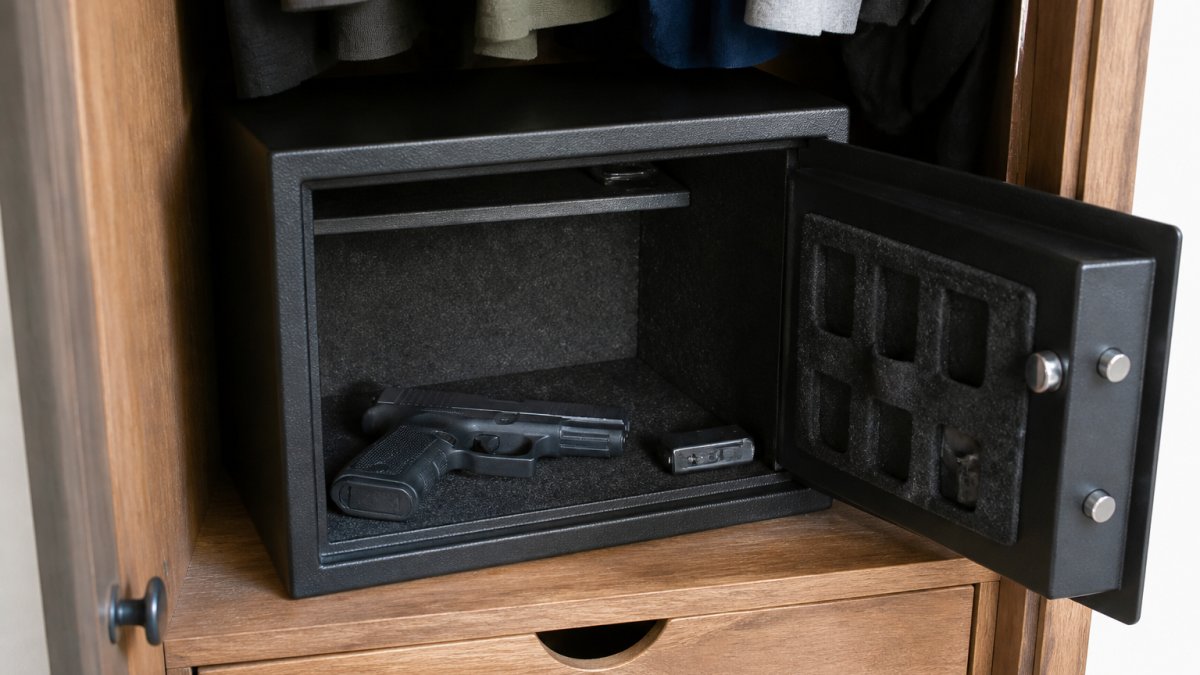
Choosing a Safe, Lock Box, or Gun Lock

Watch out: the most common mistake is buying a lock box and then leaving the key in the lock or the combination written on the box. That defeats the entire purpose and can be used against you if a minor gains access.
Maryland Child Access Prevention Law Firearms
Maryland’s child access prevention law makes it a crime to leave a loaded firearm accessible to a minor without supervision (Laws). The statute applies whether or not the child actually fires the weapon; access alone is enough. This is the provision that turns storage from a best practice into a legal duty.
The law is narrower than many permit holders assume. It targets loaded firearms and minors, not unloaded firearms and adults. But “minor” reaches further than parents expect: it covers any child under the age of majority, including a friend’s teenager visiting your home or a nephew staying for the weekend.
Penalties for Unsafe Storage or Unauthorized Access
Consequences scale with what happens after access occurs. A violation where a child gains access without injury is treated differently from one where the firearm is discharged, and differently again where someone is hurt. Securing competent Maryland gun charge defense becomes the immediate priority for anyone navigating the complex legal repercussions that follow such a catastrophic failure in firearm security.
Beyond criminal exposure, there is civil liability. If a minor takes your firearm and harms someone, you can expect a negligence claim. Homeowner’s insurance may not cover an intentional or criminal act, which means the loss comes out of your own pocket.
Maryland Gun Storage in Vehicles
A vehicle is where storage compliance breaks down most often, because a car is neither your home nor a holster. Maryland treats a firearm in a vehicle differently depending on whether you are transporting it, carrying it under a wear and carry permit, or leaving it unattended, and permit holders routinely conflate those three situations.
The baseline transport rule is that a firearm being moved in a vehicle must be unloaded and enclosed in a case or container designed for that purpose. A shopping bag, a glove compartment, or a cupholder does not satisfy that standard.
The Permit-Holder Exception, and Its Limits
A Maryland wear and carry permit changes the vehicle picture in one specific way: it allows you to carry a loaded handgun in a vehicle in a manner a non-permit holder cannot. That exception is tied to carrying, not storing. The moment the firearm is no longer under your direct control, you leave the car, you go into a prohibited building, you park overnight, the permit exception stops doing work for you and the storage and access rules take over.
A permit authorizes carry; it does not necessarily authorize leaving a loaded firearm accessible in an unattended vehicle.
What to Do When You Cannot Carry Into a Location
If you choose option two, do it in this order: park in a well-lit, visible spot; unload completely (magazine out, chamber cleared); place the firearm in a locked case or lock box; secure the case so it cannot slide or be grabbed quickly; and conceal it from window view. Never leave a firearm in a vehicle overnight if you can avoid it.
Transport Rules vs. Storage Rules
Transporting means moving a firearm from one place to another; storage means leaving it. The transport rule (unloaded, in an enclosed case or container) and the storage rule (not accessible to unauthorized people) are separate obligations that can both apply on the same trip.
If you travel between Maryland and neighboring states, the rules change at the line. See how concealed carry reciprocity affects storage and transport across state lines.
Maryland Concealed Carry Prohibited Places
A Maryland wear and carry permit does not open every door. Prohibited locations fall into two categories, and the distinction matters for how you plan storage around them.
Statutory prohibitions are set by law and apply regardless of what a property owner posts. These include schools and school property, government buildings, courthouses, detention facilities, and establishments that serve alcohol for on-premises consumption, among others.
Property-owner prohibitions are set by the person or business controlling the space. A private business can bar firearms on its premises, and the consequence is typically a trespass issue rather than a carry-law violation.
Read the sign, but do not rely on the sign alone. For statutory locations, the law controls whether or not anyone posted notice. For private property, ask if the sign is ambiguous, a short conversation at the door beats a trespass claim.
The Storage Question Follows You Into These Spaces
This is the gap most carry guides skip. If you are driving to a courthouse, you cannot carry inside, and you should not leave a handgun loose in the car. The prohibited-place rule and the vehicle-storage rule interact, and the interaction is where permit holders get into trouble. Our concealed carry training covers Maryland prohibited places and judgment around them.
Why the List Keeps Changing
Prohibited-place rules are not static. Legislatures amend them, agencies interpret them, and courts review them. A list you memorized at permit class can be out of date within a year. Before relying on any summary, including this one, confirm the current controlling provisions and any recent amendments, and check whether local rules add restrictions on top of state law.
How Storage Rules Apply to Concealed-Carry Permit Holders
A permit holder has no storage exemption. Review the MD Wear & Carry Permit Application Process to see how storage rules tie to your permit. The same child access and secure-storage obligations apply to you as to any other firearm owner, and the permit adds obligations rather than removing them. Where the permit matters is in transport: it allows you to carry a loaded handgun in a vehicle in ways a non-permit holder cannot.
Practical Decision Guide: Home, Vehicle, and Temporary Storage
| Situation | Storage method | Loaded? | Key risk to avoid |
|---|---|---|---|
| Home, no minors present | Lock box or quick-access safe | May stay loaded | Key or code left accessible |
| Home, minors or visitors present | Locked safe, unloaded, ammo separate | No | Firearm accessible “just for a minute” |
| Vehicle, short stop | Locked case in trunk or locked box | No | Case visible through windows |
| Vehicle, overnight | Do not leave in vehicle | No | Theft and reporting obligations |
| Entering a prohibited place | Secure at home before leaving | No | Improvised hiding in the car |
| Temporary stay away from home | Portable lock box, cable-secured | No | Unsecured hotel room storage |
Get Maryland-Compliant Firearm Storage Training
We support students with disabilities and limited English proficiency. Our Maryland Wear & Carry Handgun Course covers compliant carry and storage training.
Frequently Asked Questions
What is the current law regarding gun storage in Maryland?
Maryland does not have a general mandate to lock all firearms at home, but state law requires that a person not store or leave a loaded firearm in a location where a minor or unauthorized person can access it. For concealed-carry holders, the practical rule is to secure firearms when not carried. Maryland firearm storage best practices include using a locked safe, lock box, or gun lock, keeping ammunition separate, and ensuring keys or combinations are not accessible to children or visitors.
Can I keep a gun in my car in Maryland?
Maryland gun storage in vehicles is restricted. A concealed-carry permit holder may leave a handgun in a vehicle only if it is locked in a container or the vehicle is locked and the firearm is not visible. However, leaving a firearm unattended in a vehicle is strongly discouraged and may violate local ordinances. For transport, unload the firearm and place it in a locked case in the trunk or a locked container away from the driver’s reach. Always check current Maryland State Police guidance before traveling.
What are Maryland’s child access prevention laws for firearms?
Maryland’s child access prevention law makes it a crime to leave a loaded firearm in a place where a minor is likely to access it without supervision. Penalties can include misdemeanor charges and fines, and may escalate if a child uses the firearm to cause harm. The law applies to all firearm owners, including concealed-carry permit holders. Secure storage, such as a locked safe or trigger lock, is the most reliable way to comply and reduce risks of unauthorized access.
Can you conceal carry at a park in Maryland?
Maryland concealed carry prohibited places include public parks unless a specific exception applies. State law bans carrying firearms in sensitive locations such as schools, government buildings, and parks. A wear and carry permit does not override these restrictions. If you plan to visit a park, store your firearm securely at home or in a locked vehicle container before entering. Check local park rules and Maryland State Police updates, as prohibited locations can change.
How should a concealed carry holder store a firearm in a vehicle?
For vehicle storage, unload the firearm and place it in a locked case or locked container. The container should be out of sight, ideally in the trunk. Never leave a firearm in a glove box or center console. If you must leave it in the vehicle, lock the vehicle and ensure the container is secured. Maryland gun storage in vehicles also requires that the firearm not be accessible to unauthorized persons. Consider a portable lock box with a cable for temporary secure storage.
What should I do with my firearm when I cannot carry it into a location?
When you cannot carry into a prohibited location, plan ahead. Use a secure storage option such as a locked vehicle container or a portable lock box. Do not leave the firearm unattended in a public restroom or with someone who is not authorized. If the location offers secure storage (e.g., some courthouses), follow their procedures. Otherwise, return the firearm to your home safe or a temporary storage facility. Always keep the firearm unloaded and secured during transport.
Storage compliance is not complicated, but it is easy to let slide once the permit is in your wallet and the routine sets in. The rules that protect you are the same ones that protect the people in your home, and they only work when they are followed every single day. Get started with A Security Training Academy, Inc and build a storage routine that holds up to scrutiny, with instruction built around the permits, the paperwork, and the practical decisions you actually face.





 Install Security Training Academy