

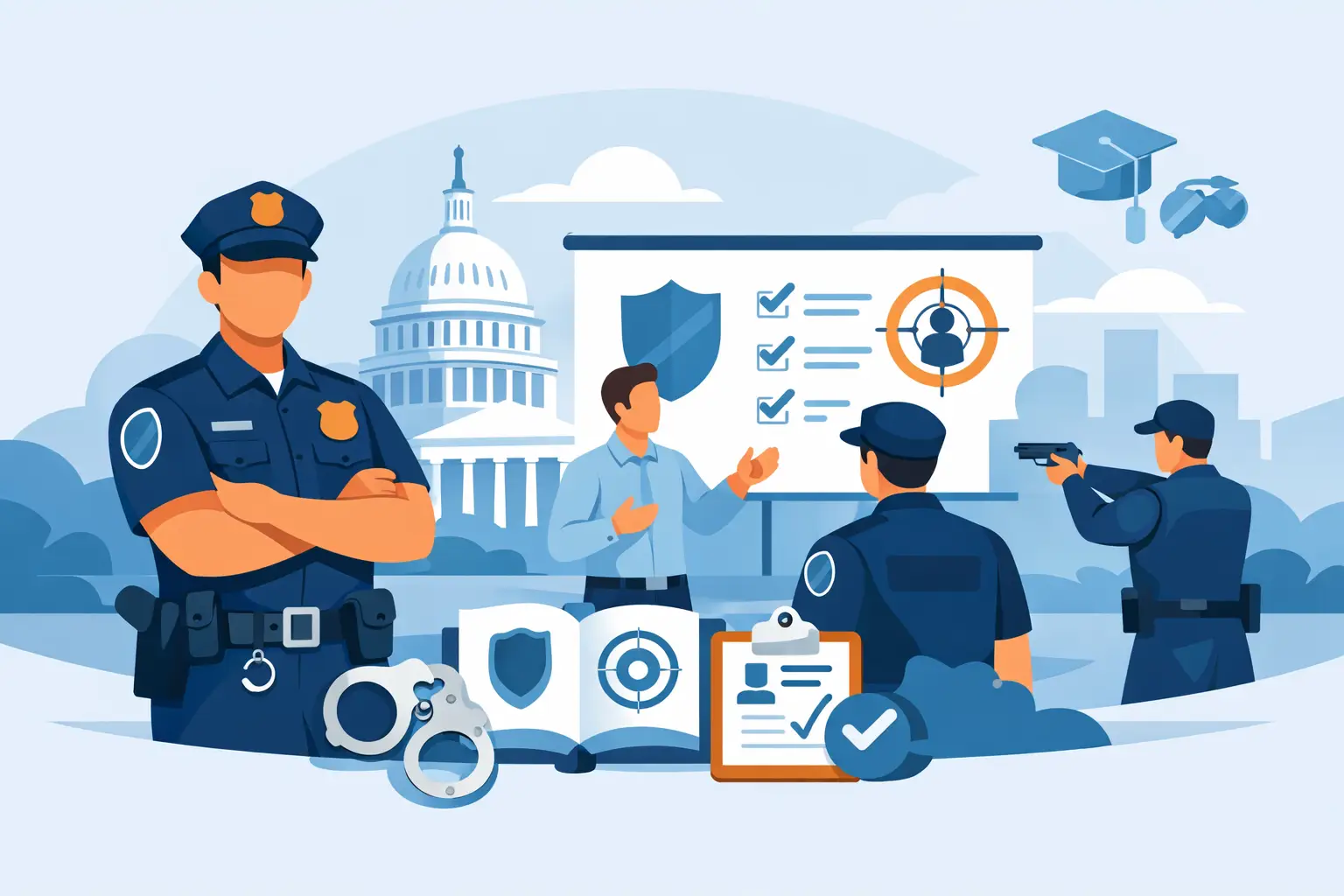
A Special Police Officer position in Washington, DC is not a standard guard assignment. The authority connected to the role is limited, location-specific, and dependent on approval, appointment, and proper conduct. DC special police officer training should prepare a candidate to work within those boundaries before the first shift, not after a preventable mistake.
For candidates entering the profession, the objective is straightforward: meet the current District requirements, complete approved instruction, submit a complete application package, and understand exactly what authority applies at the assigned property. For employers, a trained SPO is a better operational asset because that officer understands reporting, de-escalation, use-of-force limits, and the consequences of acting outside the appointment.
What a DC Special Police Officer Does
A DC Special Police Officer is appointed to protect a specified premises, organization, or area authorized through the District’s process. This is not the same as becoming a Metropolitan Police Department officer, and it does not create general law-enforcement authority throughout the District.
The scope of the appointment matters. An SPO must know the boundaries of the assignment, the employer’s post orders, the applicable rules for detention and arrest, and when to request MPD assistance. A professional officer does not treat a badge, uniform, or duty weapon as permission to exceed the authority granted by law and appointment.
This distinction is central to employability. Property managers, hospitals, schools, commercial facilities, and event operations need officers who can protect people and property without creating unnecessary liability. Good training teaches presence and decision-making alongside the legal framework.
DC Special Police Officer Training: Core Subjects
Approved DC Special Police Officer training is designed to establish a foundation for lawful private-security operations in the District. Course content and administrative requirements can change, so candidates should confirm the current standards with the appropriate DC licensing authority before registering or submitting an application.
A serious entry-level course should address the legal and practical subjects that show up on post. These include the role and limitations of an SPO, District criminal and civil law concepts, powers of arrest and detention, search and seizure concerns, report writing, evidence preservation, ethics, communications, and emergency procedures.
Authority, detention, and use of force
The most consequential training block is often the one candidates underestimate: when an officer may act and when the officer must slow down. An SPO may encounter trespassers, disorderly conduct, theft allegations, workplace disputes, and emergencies. Each situation requires judgment, clear communication, and a lawful basis for any intervention.
Training should distinguish between verbal direction, escorting a person from private property, defensive actions, detention, arrest procedures, and calling law enforcement. Force must be objectively reasonable, necessary under the circumstances, and consistent with the law and employer policy. The best outcome is frequently a controlled resolution without physical force.
Reality-based scenarios are valuable because they expose the gap between knowing a policy and applying it under stress. An officer who can issue clear commands, create distance, use cover, request assistance, and document events accurately is more prepared than one who has only memorized definitions.
Report writing and documentation
Every SPO should expect that a report may be reviewed by a client, supervisor, insurer, attorney, investigator, or court. Reports need facts, not conclusions. Record what you observed, what was said, the actions taken, names and descriptions of involved parties, witnesses, notifications, and the final disposition.
Avoid vague language such as “the subject became aggressive” without explaining the conduct. A useful report describes behavior: clenched fists, threatening statements, attempts to enter a restricted area, refusal to leave after notice, or movement toward another person. Accurate documentation protects the officer, the employer, and the client.
Professional conduct and public contact
Special police work places officers in direct contact with tenants, visitors, employees, vendors, patients, residents, and members of the public. Courtesy is not optional. It is part of effective security.
Candidates should be prepared to communicate calmly with people who are confused, upset, intoxicated, mentally distressed, or simply unwilling to follow site rules. De-escalation, conflict management, cultural awareness, and customer-service discipline are operational skills. They reduce complaints and can prevent a minor incident from becoming a physical confrontation.
Firearms Training Is a Separate Responsibility
An SPO assignment may be unarmed or armed. Candidates should never assume that completing special police training automatically authorizes armed duty. Firearms authority involves separate qualifications, approvals, employer policies, range standards, and continuing responsibilities.
If an armed assignment is part of the career plan, the candidate should confirm the required firearms credential pathway before paying for training. A quality firearms program should cover safe handling, storage, loading and unloading, marksmanship, judgment, legal use of force, qualification standards, and documentation after a weapons-related incident.
Shooting skill alone is not enough. An armed officer must make sound decisions before drawing a firearm. The ability to recognize a threat, use cover, communicate, avoid crossfire concerns, and transition to medical response or police notification is just as important as hitting a qualification target.
Candidates pursuing concealed-carry training should also keep that process separate from employment authorization. A carry permit, an employer-issued weapon, an SPO appointment, and an armed security assignment can involve different rules. Verify each requirement rather than relying on assumptions from another jurisdiction.
The Administrative Process Deserves Equal Attention
Many otherwise qualified candidates experience delays because they treat paperwork as an afterthought. District applications commonly involve identity documentation, background review, fingerprinting, photographs, training certificates, employer-related materials, and applicable fees. The exact package depends on the credential and the current District process.
Start by reviewing the application instructions line by line. Make sure names, addresses, dates, and prior employment information match across every document. Keep copies of certificates, receipts, submitted forms, and correspondence. If a course certificate includes a registration or approval number, preserve it with your personnel records.
Do not report for duty as an SPO until the required appointment, registration, or authorization is in place. A client deadline is not a substitute for legal approval. Employers also should verify credentials before assigning an officer to a post that requires special police authority or armed qualifications.
Choosing Training That Supports the Job
The lowest-cost class is not always the best value. Candidates should look for training that addresses the actual job conditions they will face in Washington, DC, not generic material copied from another state’s guard-card curriculum.
Ask whether the program covers District-specific authority, report writing, use-of-force decision-making, emergency response, and realistic scenario work. Confirm that instructors understand the current credential process and can explain what documents a candidate must retain. For armed candidates, verify that firearms instruction and qualification services match the applicable professional requirement.
A Security Training Academy, Inc. approaches career preparation with this operational focus: training must support lawful work, accepted procedures, and professional advancement across the DC, Virginia, and Maryland region. That matters for candidates who may begin on an unarmed DC post and later pursue armed assignments, protective services, investigations, or additional credentials.
Prepare Before Class Begins
Arriving organized makes training more productive. Bring valid identification, any required registration number or application materials, and course-specific equipment listed by the provider. For range training, follow all equipment and ammunition instructions in advance. Do not bring a firearm to class unless the course directions specifically require it.
Candidates should also arrive prepared to participate. Ask questions about scenarios that relate to the intended assignment, such as handling unauthorized access at a commercial building, responding to a domestic dispute at a residential property, or protecting a medical facility after hours. The more clearly an officer understands the post environment, the better the officer can apply the training.
A DC SPO credential can open a serious professional path, but the credential carries equally serious responsibility. Treat the training, paperwork, and post orders as part of the job itself, because disciplined preparation is what allows an officer to act with confidence when the situation is no longer routine.
 Install Security Training Academy